
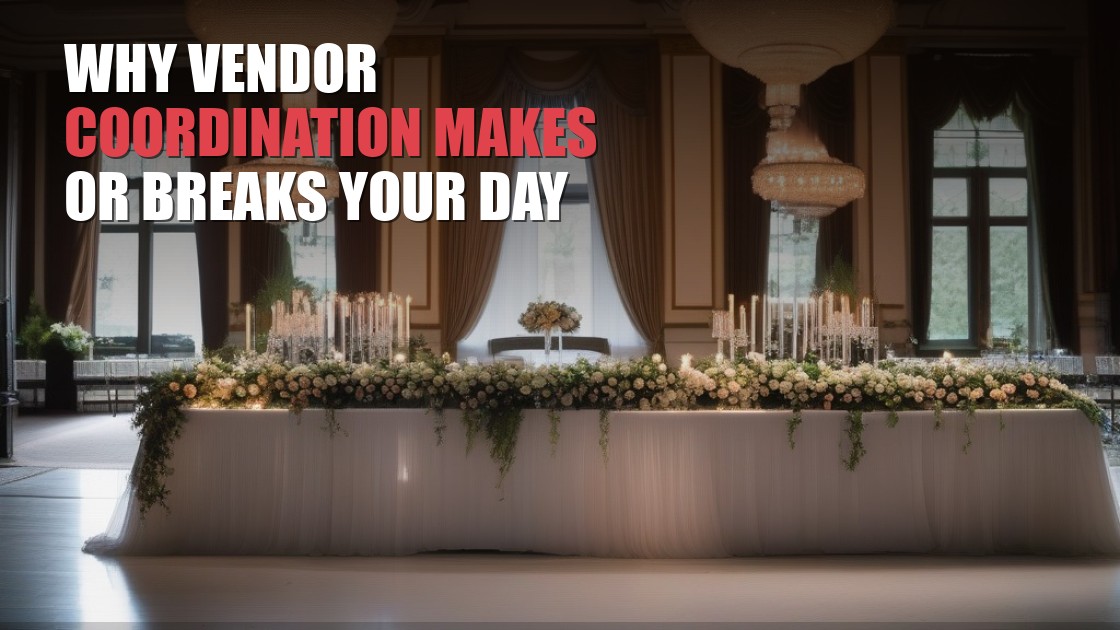
Hiring talented vendors is only half the equation — without strong vendor coordination, even the best individual teams can create confusion on the wedding day.
Without coordination, vendors may unknowingly conflict on setup timing or space, causing delays that ripple through the entire event.
A coordinator ensures every vendor, from florist to lighting designer, understands and executes toward the same overall design vision.
On the wedding day, real-time coordination between vendors keeps the timeline on track even when small issues arise.
Strong coordination means the couple never has to field vendor questions or troubleshoot logistics during their own celebration.
Can vendors coordinate directly without a planner?
They can to some extent, but a dedicated coordinator provides a single point of contact that keeps communication efficient and consistent.
When should vendor coordination begin?
Ideally four to six weeks before the wedding, with a detailed walkthrough of the full-day timeline.
Want seamless vendor coordination for your wedding? See our full planning services.






.png)
Share This Blog